
In today’s digital world, online privacy and internet freedom are more important than ever. Whether you want to keep your personal data safe from hackers or access websites blocked in your country, a Virtual Private Network (VPN) is the best tool for the job.
But what exactly is a VPN, and how does it manage to bypass internet filtering so easily? In this comprehensive guide, we will explain the technology behind VPNs in simple, easy-to-understand terms.
What is a Virtual Private Network (VPN)?
A VPN is a service that creates a secure, private connection between your device (like your phone or computer) and the internet.
Normally, when you connect to the internet, your Internet Service Provider (ISP) can see everything you do. They see which websites you visit, and they give you a unique ID card called an IP address, which shows your real physical location. A VPN changes this process completely to protect your identity.
How Does a VPN Work? The 3 Core Steps
To understand how a VPN keeps you safe, you just need to know its three main functions:
1. The Secure Tunnel
When you turn on a VPN, it creates a “digital tunnel” between your device and a VPN server located somewhere else in the world. All your internet traffic travels through this secret tunnel.
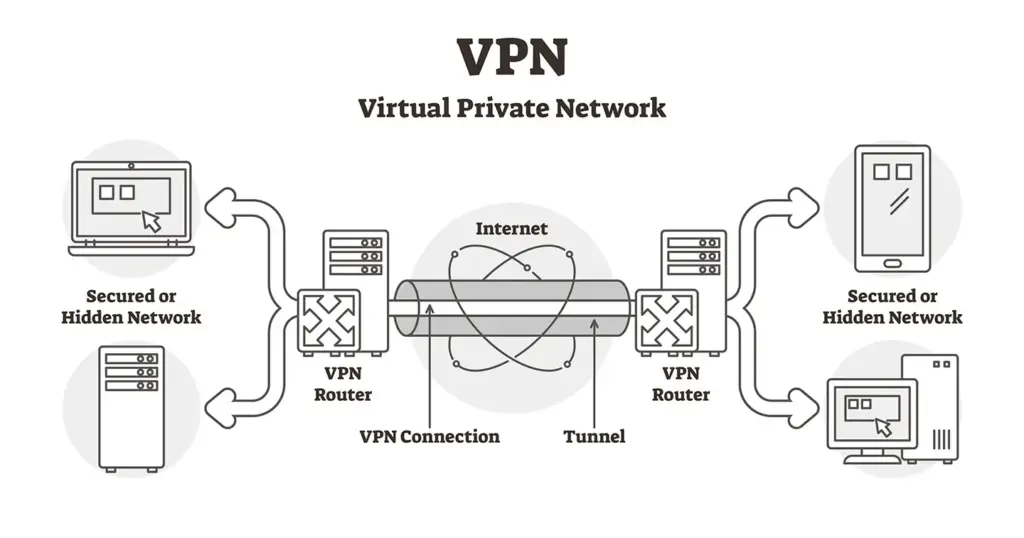
2. Data Encryption
Before your data enters the tunnel, the VPN encrypts it. This means it takes your normal data and scrambles it into a complex code. Even if a hacker, your ISP, or the government intercepts your connection, they will only see unreadable text. They won’t know what websites you are looking at or what messages you are sending.
3. IP Address Masking
When your data reaches the end of the tunnel (the VPN server), it goes out to the public internet. However, the internet no longer sees your real IP address. Instead, it sees the IP address of the VPN server. If you live in Asia but connect to a VPN server in Europe, websites will think you are browsing from Europe.
How Does a VPN Bypass Internet Filtering and Censorship?
Many governments, schools, and workplaces use internet filtering systems to block certain websites or social media apps. They usually do this in two ways:
- IP Blocking: Blocking access to the server of a specific website (like YouTube or Twitter).
- Keyword Filtering / Deep Packet Inspection (DPI): Scanning the user’s data to see if they are trying to access a banned topic.
Here is exactly how a VPN defeats these filters:
Defeating Location Blocks (Geo-Restrictions)
If your country blocks a specific website, your local internet provider will stop your connection if it sees you trying to go there. Because a VPN masks your IP address, you can easily bypass this. By connecting to a VPN server in a free country, your internet provider only sees that you are connecting to the VPN server, not the blocked website. The website then allows you in, thinking you are a local user in that free country.
Defeating Data Scanning (Censorship)
Because a VPN uses strong encryption, internet filters cannot read your data. If the government’s firewall scans your traffic to see if you are opening a blocked app, the encryption stops them. To the firewall, your internet activity just looks like a secure, random stream of data. Since the filter doesn’t know what you are doing, it lets the data pass through.
Key Benefits of Using a VPN
Using a VPN offers much more than just bypassing restrictions. Here are the top reasons to use one every day:
- Ultimate Privacy: Stop internet providers and advertisers from tracking your browsing history.
- Public Wi-Fi Security: Stay safe from hackers when using free Wi-Fi in cafes, hotels, or airports.
- Access Global Content: Watch movies and shows on streaming platforms that are normally restricted in your region.
- Safe Communication: Ensure your private messages and emails remain confidential.
Understanding how a VPN works does not have to be complicated. By using an encrypted tunnel and hiding your real IP address, a VPN acts as your personal digital bodyguard. It not only keeps your personal information safe from hackers but also gives you the freedom to bypass internet filtering and explore the web without borders.
If you want to protect your digital life and enjoy a free, open internet, using a reliable VPN is the smartest choice you can make.